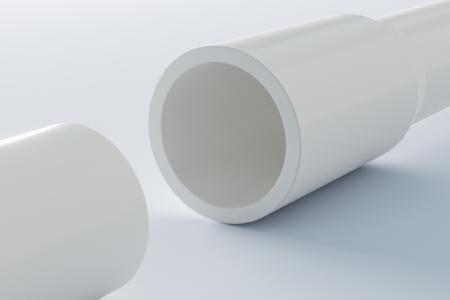
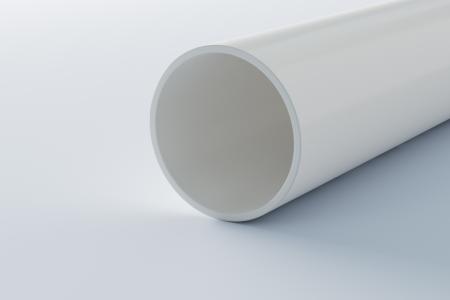
PVC cellular core and ABS are both plastic drain, waste and vent (DWV) pipes used in residential plumbing, but they are made from different materials that perform differently. Compared to ABS, PVC DWV pipe offers better general chemical resistance, has a far lower flame spread, releases less heat in a fire, drains more quietly, and sags less between supports
- Flame spread: Standard rigid PVC has a flame spread index of 10–20, compared to 200–275 for standard ABS (Steiner Tunnel Test, ULC S102.2 / ASTM E84).
- Heat release: Peak heat release for PVC is below 100 kW/m², versus 200 kW/m² or more for ABS (ASTM E1354 at 20 kW/m²).
- Extinguishability: PVC's Limiting Oxygen Index is 47, roughly double ABS's 18 (ASTM D2863), so PVC is easier to extinguish.
- Sound dampening: A CMHC study found PVC cellular core DWV pipe produced lower sound levels than ABS cellular core DWV pipe in every installation scenario tested.
- Beam strength: PVC's higher modulus of elasticity gives a length of pipe more beam strength and less sag than ABS.
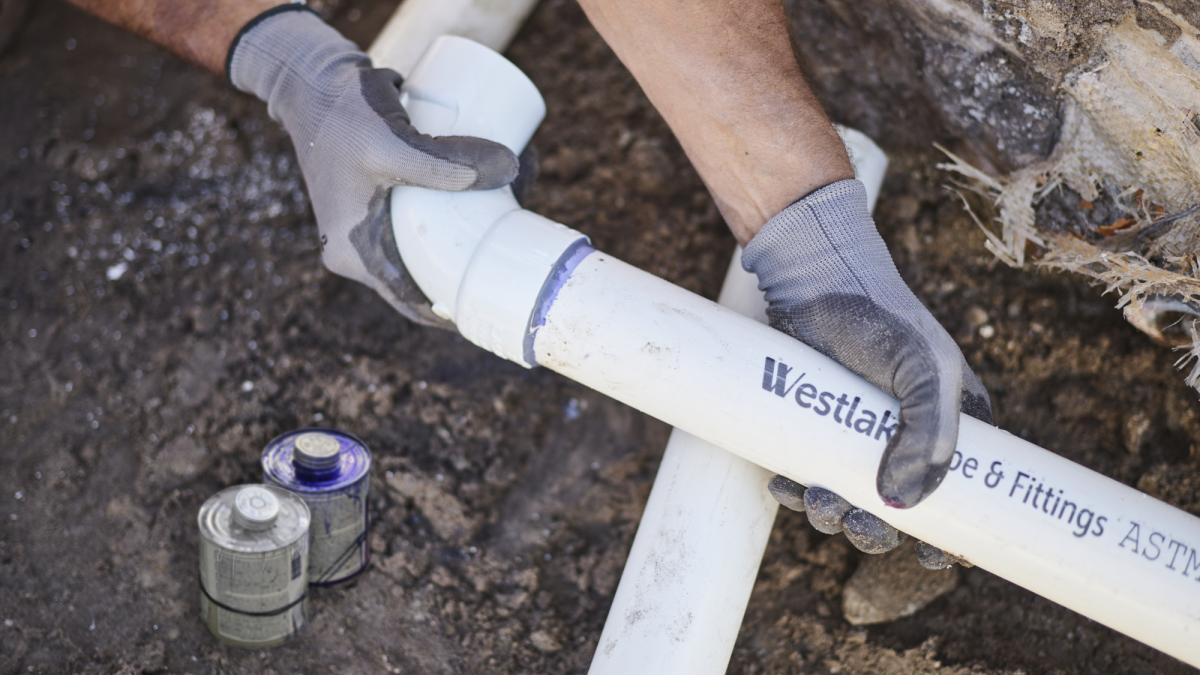
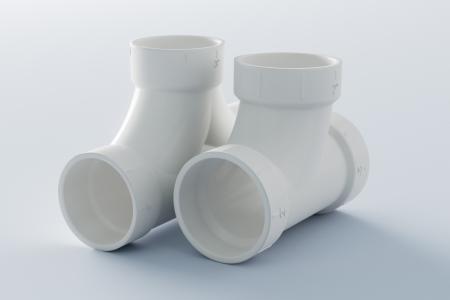
PVC and ABS DWV systems use different fittings and solvent cements and are not interchangeable. Westlake Pipe & Fittings' PVC DWV Cellular Core Pipe is joined with PVC DWV fittings, primer and solvent cement certified to ASTM F891. For a full side-by-side comparison, download the Westlake Pipe & Fittings PVC vs. ABS Pipe product overview.