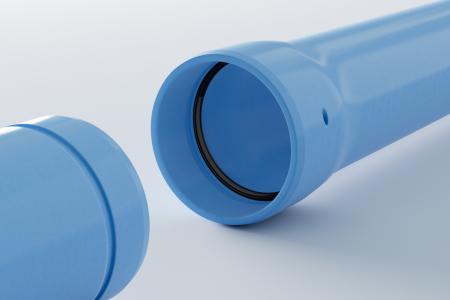
NRH had some specific reasons for selecting Certa-Lok® RJIB PVC pipe over other HDD pipe options. “First, we wanted to stick with a familiar, reliable product, which was DR18 AWWA C900 PVC pressure pipe,” said Justin Dean, construction superintendent for NRH. “We didn’t want to add to the training burden for the team, and that would be required if we went with a fused product.” Other drawbacks with the fused option included the amount of equipment needed for the process. The public works team was not interested in storing the additional equipment required or adding even more equipment to the maintenance program. This narrowed their pipe selection process to segmental AWWA C900 restrained-joint pipe. Another segmental pipe option was initially selected, but the team quickly found they needed a joining system that offered a consistent, quick and easy assembly process as well as a product that could be disassembled if needed. Another often-overlooked project requirement is product availability to support the project schedule. NRH found on-time delivery of the HDD pipe was much more likely with Certa-Lok than with the product previously selected.
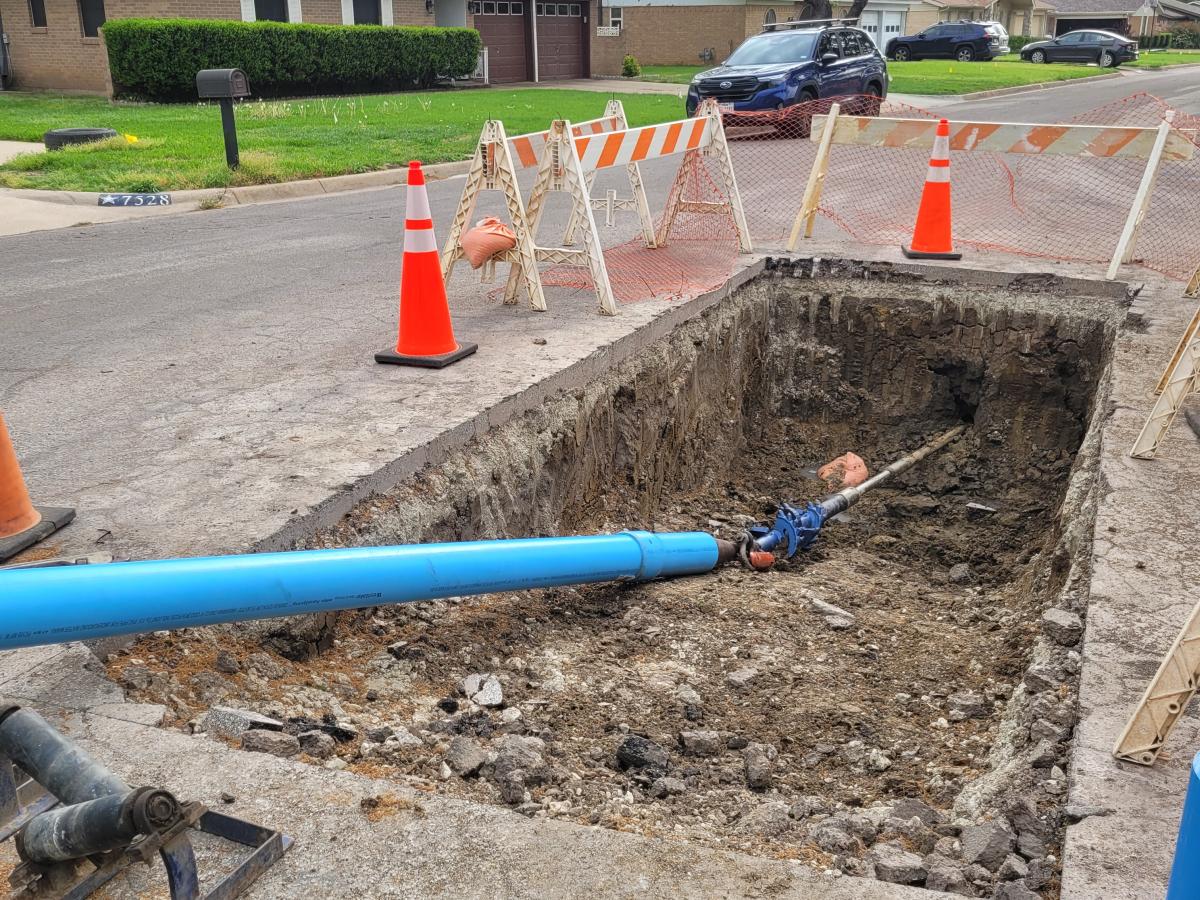
The replacement of the water line under the Susan Court neighborhood was in the older part of town and was being served by a 6" cast iron water line that quickly reduced down to a 4" water line. NRH prioritized this project due to the age of the pipe and the resulting higher maintenance costs. With the pipe replacement, there was an added benefit. It would improve the water circulation for the 18 lots served by the line. Further review showed another reason to prioritize Susan Court was because the Streets & Traffic Division was scheduled to mill and replace the asphalt road in the near future. By replacing the pipe ahead of the road replacement, NRH would avoid cutting into newly laid pavement.
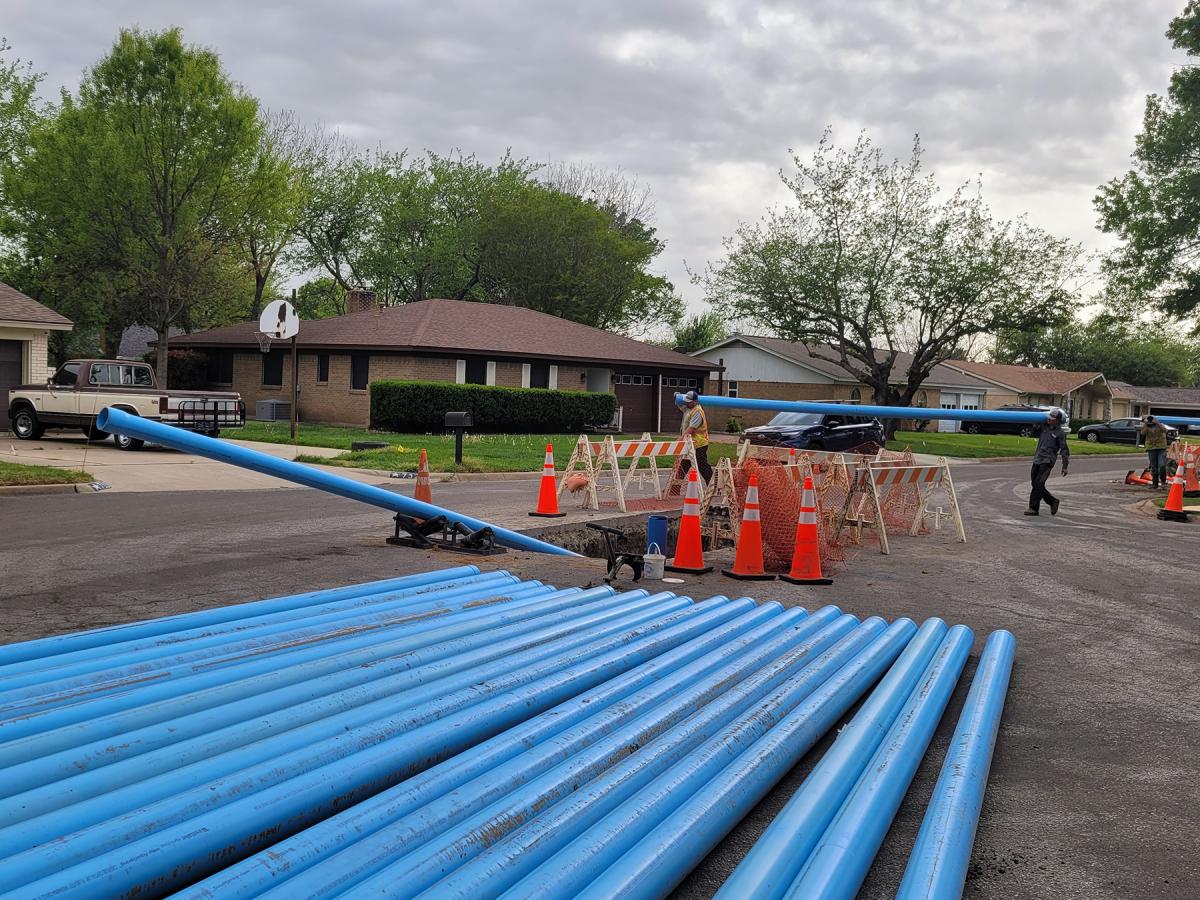
The Susan Court project map shows the 18 lots and the approximate location of the newly installed 6" water line. Looking at the neighborhood street and driveway access, installation of Fusible PVC would have required pre-fusing 630’ of pipe into a single pipe string creating a logistical problem for the family homes near the construction, blocking driveways and other access. Staging fusible pipe through the neighborhood in preparation for pull back would be highly disruptive. These factors provided justification for NRH’s preference for segmental pipe over fused products for the HDD project.
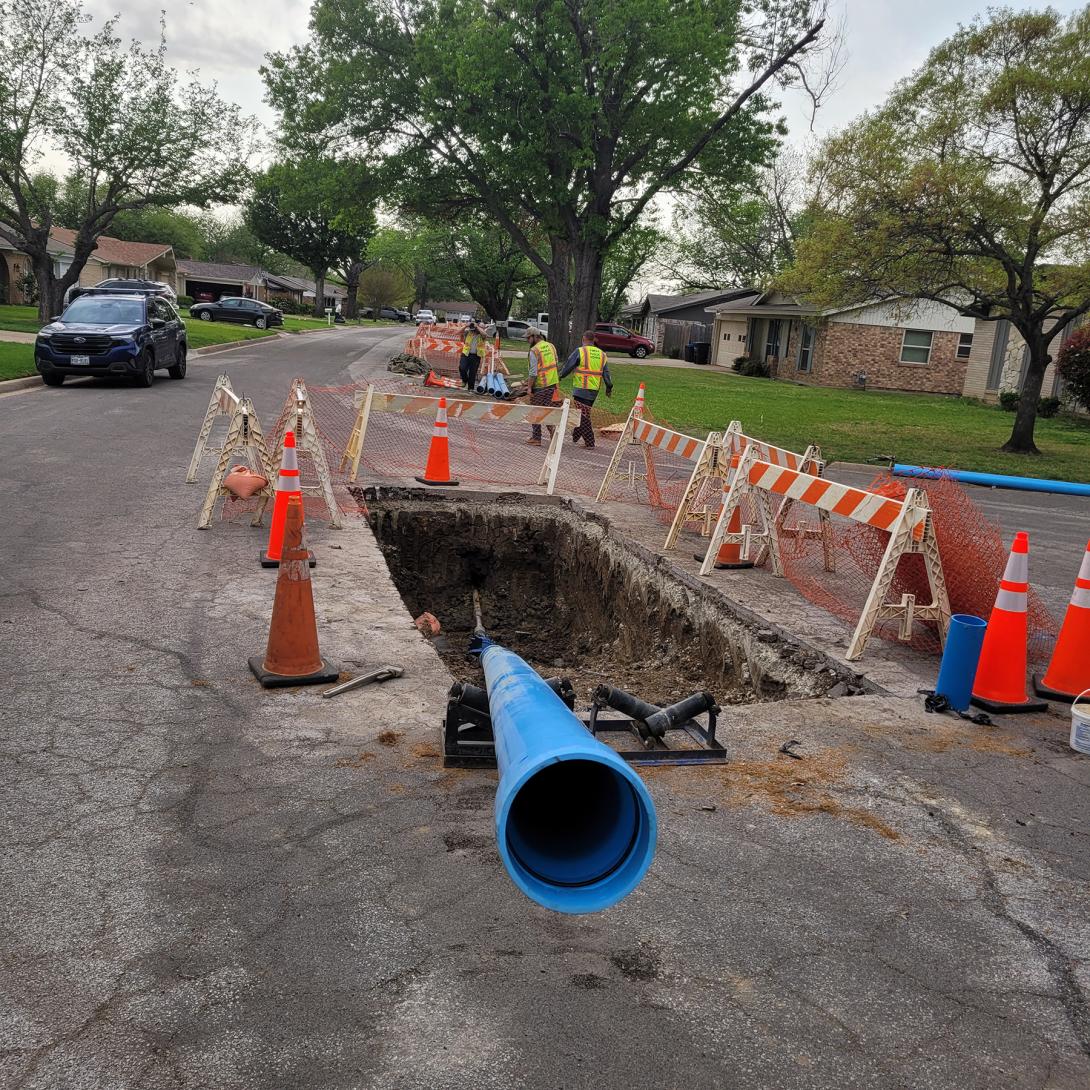
The project started on Scott Drive with the installation continuing to Susan Court. Using a Ditch Witch AT32 with 32,000 lb of pull-back capability, the construction superintendent scheduled the HDD pull back to occur May 2, 2025, in the window of time between storms that occur frequently in late April and early May. Having the pipe near the pit facilitates the cartridge style assembly method, where each 20' pipe segment is added to the pipe string during the pull-back operation. Joint assembly occurs while a drill rod is unthreaded and re-racked; the time needed to do that is more than the time it takes to assemble a Certa-Lok® joint. For this project, the restrained joint was assembled in under two minutes. The crew did this manually with the aid of an assembly tool called the Eagle Claw.
For this pipe size and DR, the weight of a stick of pipe is about 106 pounds. The crew used a short stub of pipe for installing the pulling head, which allowed them to do this on the bed of their utility truck. The stub of pipe, a swivel, and a reamer were attached to the drill rods. Then the first length of Certa-Lok was connected to the short Certa-Lok bell section. The crew was able to drill the bore path and do the pull back of 630' of pipe in a single day.
Now that the in-house HDD program has been in place for over two decades, Josh Oler and Justin Dean look back on the program they created and the challenges that were faced over the years. “One of the first challenges is keeping a fully staffed crew of trained workers,” said Josh Oler, utility superintendent NRH Public Works Department. “As crew members are promoted or relocated, new crew members need education and training on the HDD operation.” NRH has a strong team with the institutional knowledge of Oler and Dean as they continue to manage and develop the program. These key individuals are on hand to help problem-solve any unexpected issues that sometimes arise in the field.
Ongoing challenges include:
- Prioritize the city’s water lines that are most in need of replacement for the current fiscal year. These will likely be in the older parts of town, where ongoing water line repair costs can exceed the replacement cost.
- Identify the optimal replacement age of equipment. With experience, they have found it more cost effective to replace equipment sooner rather than incurring higher repair costs for older equipment.
- Respect the limitations of the crew and the equipment. Cost and schedule overruns are more likely when either is operated at the edge of its capabilities. In these cases, the risks outweigh the rewards.
- Remember to consider both installation options. They have learned through experience that HDD or open cut may be the best approach. It all depends upon project specific constraints.
Both Oler and Dean agree about the savings NRH enjoys in time and repair costs when HDD is used. The residents of the established neighborhoods with the older lines appreciate the quicker installation that HDD offers along with the reduced amount of disruption.
This is one of several successful HDD projects NRH plans to complete in the calendar year of 2025.