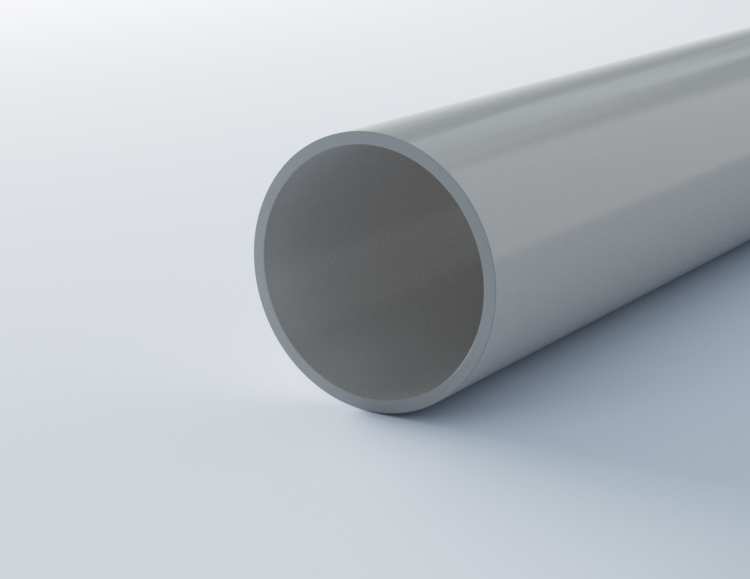
Tuyaux en PVC à âme alvéolée NAPCORE™ DWV

Le tuyau en PVC à âme alvéolée NAPCORE™ DWV de Westlake Tuyaux et Raccords est un tuyau en PVC DWV rentable qui peut être utilisé pour des applications de construction résidentielle combustible de faible hauteur.

  • Ce Tuyaux à âme alvéolée (mousse) coextrudée se compose de couches de "peau" intérieure et extérieure et d'une âme "moussée"
  • Des agents moussants sont ajoutés au matériau PVC, créant ainsi un noyau à cellules fermées de faible densité
Voir le catalogue des pièces et accessoires
Nous contacter

Spécifications techniques du produit

Voir les informations techniques, les spécifications et plus encore.

Open Accordion Menu Item
Dimensions nominales
1½" , 2" , 3" , 4" , 6"
Diamètre Standard
IPS
Classe
Schedule 40
Pression nominale
120 psi, 200 psi, 300 psi, 600
Options des produits
Mur solide
Certifications
NSF 14

FAQs

What is the difference between PVC cellular core DWV pipe and ABS DWV pipe?

Open Accordion Menu Item

PVC cellular core and ABS are both plastic drain, waste and vent (DWV) pipes used in residential plumbing, but they are made from different materials that perform differently. Compared to ABS, PVC DWV pipe offers better general chemical resistance, has a far lower flame spread, releases less heat in a fire, drains more quietly, and sags less between supports

  • Flame spread: Standard rigid PVC has a flame spread index of 10–20, compared to 200–275 for standard ABS (Steiner Tunnel Test, ULC S102.2 / ASTM E84).
  • Heat release: Peak heat release for PVC is below 100 kW/m², versus 200 kW/m² or more for ABS (ASTM E1354 at 20 kW/m²).
  • Extinguishability: PVC's Limiting Oxygen Index is 47, roughly double ABS's 18 (ASTM D2863), so PVC is easier to extinguish.
  • Sound dampening: A CMHC study found PVC cellular core DWV pipe produced lower sound levels than ABS cellular core DWV pipe in every installation scenario tested.
  • Beam strength: PVC's higher modulus of elasticity gives a length of pipe more beam strength and less sag than ABS.

PVC and ABS DWV systems use different fittings and solvent cements and are not interchangeable. Westlake Pipe & Fittings' PVC DWV Cellular Core Pipe is joined with PVC DWV fittings, primer and solvent cement certified to CSA B181.2. For a full side-by-side comparison, download the Westlake Pipe & Fittings PVC vs. ABS Pipe product overview.

Is PVC cellular core DWV pipe approved for use in Canada?

Open Accordion Menu Item

Yes. PVC cellular core DWV pipe is approved for low-rise residential construction in all Canadian provinces. Westlake Pipe & Fittings PVC DWV Cellular Core Pipe can be used in houses with one or two dwelling units and row houses up to three stories across all Canadian provinces. It's permitted for use in all low-rise combustible construction in Ontario.
 

Why use PVC cellular core DWV pipe instead of ABS?

Open Accordion Menu Item

Westlake Pipe & Fittings PVC Cellular Core DWV pipe gives Canadian builders an alternative to ABS for low-rise residential drain, waste and vent systems. It offers better fire performance, quieter drainage and less sag than ABS, and a proven record in cold climates.

  • Proven at scale: PVC cellular core is the dominant residential DWV pipe in the U.S., accounting for 76% of the single-family residential DWV market in 2017 and used in every state.
  • Built for cold weather: Westlake Pipe & Fittings PVC DWV Cellular Core DWV is manufactured to Canadian-specific ASTM F3128-19, which requires enhanced cold temperature impact testing beyond the older ASTM F891 standard.
  • Fire performance: PVC's flame spread index (10–20) is a fraction of ABS's (200–275). It releases less heat and less smoke than the equivalent ABS DWV Pipe.
  • Sound performance: PVC cellular core measured quieter than ABS cellular core in CMHC testing.

Westlake Pipe & Fittings  PVC DWV Cellular Core Pipe is available in 1½", 2", 3", 4" and 6" sizes. Watch the Westlake Pipe & Fittings video, "PVC Cellular Core: A New Standard for DWV in Canada," to see it in action.

Nous contacter

Prêt à passer une commande ?